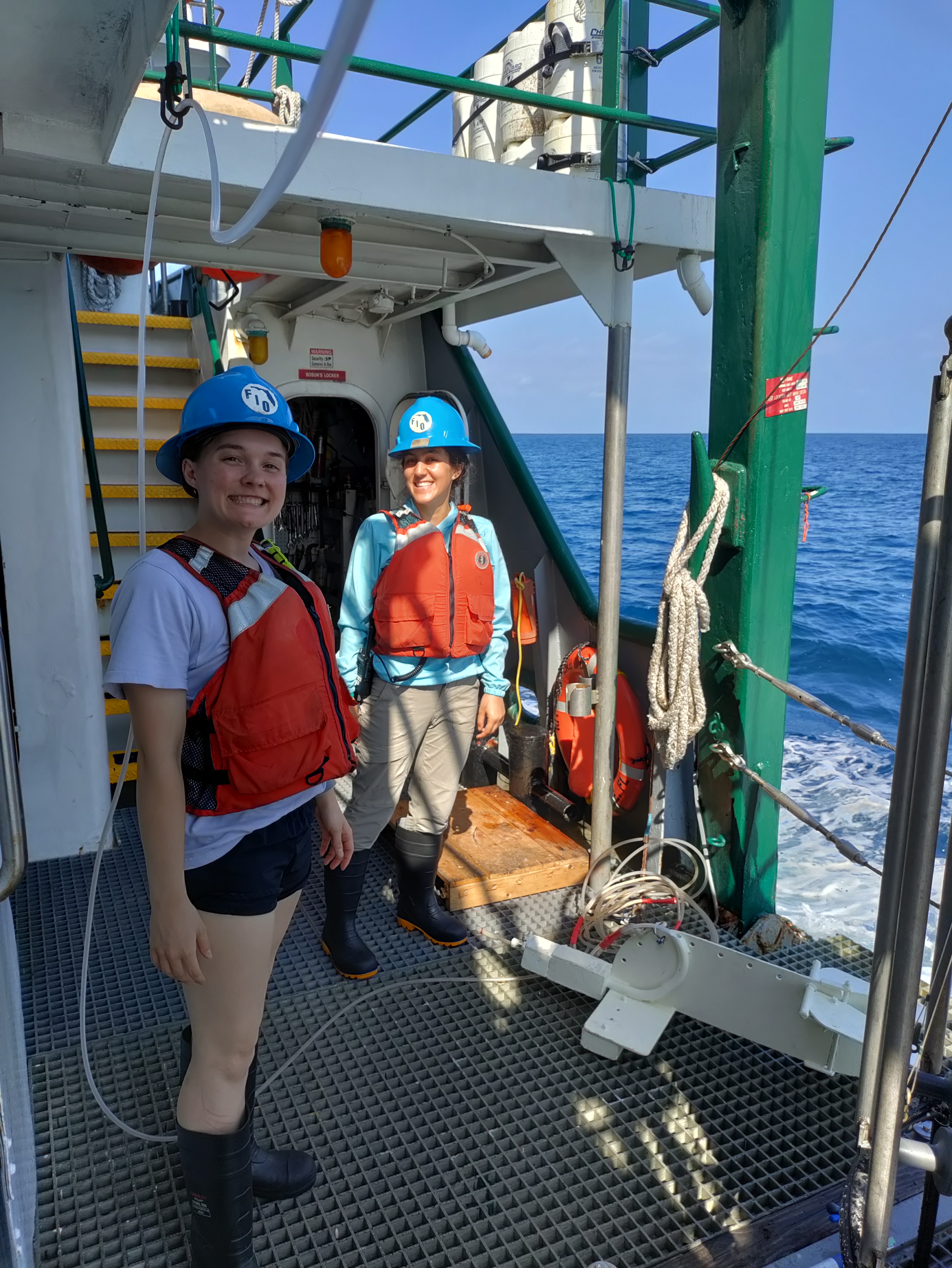
La bourse Robert « Bob » Moses d’ETS Global Philanthropy honore un leader visionnaire qui croyait que la littératie mathématique n’était pas seulement une compétence académique, mais aussi un chemin vers l’équité, l’autonomisation et la participation civique. Chaque année, la bourse récompense les leaders émergents qui perpétuent cet héritage, élargissent l’accès à l’éducation STEM, renforçant l’engagement communautaire et aidant davantage d’étudiants à se voir comme des résolveurs de problèmes et des acteurs du changement. En 2025, cet honneur a été décerné à Naja Murphy, doctorante en océanographie chimique et fervente défenseure d’une éducation scientifique pratique et inclusive. Dans cette séance de questions-réponses, Naja réfléchit à la manière dont la bourse Bob Moses a façonné sa mission de rapprochement entre la littératie STEM, l’engagement civique et la gestion de l’environnement. Elle explique comment les programmes de mentorat, les festivals scientifiques et la sensibilisation communautaire ont transformé la confiance et la curiosité des étudiants, pourquoi la culture mathématique et la culture scientifique doivent être développées ensemble, et comment les technologies émergentes comme l’IA peuvent soit élargir, soit réduire les écarts d’opportunités selon la manière dont elles sont enseignées. Ses analyses offrent un regard puissant sur ce que signifie perpétuer l’héritage de Bob Moses vers l’avenir, en rencontrant les communautés là où elles se trouvent et en construisant des voies vers la participation, la compréhension et l’impact.
La bourse Robert « Bob » Moses honore un leader qui croyait profondément en la littératie mathématique comme voie vers l’autonomisation. Comment le fait de recevoir cette bourse renforce-t-il votre propre mission d’élargir la littératie STEM et l’engagement civique dans toutes les communautés ?
MURPHY : L’héritage de Bob Moses a renforcé mon engagement envers la sensibilisation STEM, car je reconnais que les mathématiques et la littératie STEM sont des moyens puissants d’offrir un accès économique aux jeunes générations, surtout alors que l’écart technologique s’aggrave avec l’essor de l’intelligence artificielle (IA). Participer à la retraite de leadership ETS 2025 cet été m’a offert une excellente occasion de rencontrer d’autres chercheurs et d’apprendre certaines des manières révolutionnaires dont ETS aborde la littératie IA et crée des standards pour la mesurer chez les élèves. Recevoir la bourse Bob Moses renforce ma mission en me connectant à un réseau de personnes partageant les mêmes idées et des ressources dédiées à l’avancement de la littératie mathématique et de l’engagement civique. Par exemple, grâce à cette bourse, j’ai désormais la plateforme pour collaborer à des initiatives de sensibilisation, telles que des ateliers communautaires ou des programmes pilotes, pour combler directement les lacunes en mathématiques et technologies dans les communautés défavorisées. Cette reconnaissance a également revitalisé mon plaidoyer pour l’intégration des STEM et de l’engagement civique, en veillant à ce que les étudiants se voient à la fois comme des scientifiques et des citoyens actifs.
J’intègre régulièrement les principes que Bob Moses a défendus dans Radical Equations dans mes interactions avec le Junior Scientist Program, encourageant les élèves à examiner de manière critique comment les mathématiques et les sciences s’entrecroisent avec leur vie quotidienne et les décisions qui façonnent leurs communautés. Chaque année, je collabore avec le Junior Scientist Program pour mettre en relation des collégiens et lycéens avec des exposants STEM locaux lors du Festival des sciences de Saint-Pétersbourg. Pendant le festival, des jeunes scientifiques font du bénévolat auprès d’exposants tels que la NOAA, la NASA, le College of Marine Science de l’Université de South Florida (USF ), ainsi que des entreprises d’ingénierie locales, où ils interagissent avec ces exposants en aidant à diriger des démonstrations et des présentations, renforçant non seulement leur culture et leur accès aux STEM, mais aussi en enseignant au public la recherche locale et les efforts de conservation STEM.
Vous avez encadré des étudiants à travers des programmes comme le Junior Scientist Program et le Oceanography Camp for Girls. Quels changements avez-vous observés chez les élèves lorsqu’ils sont exposés directement à la science, et comment cela façonne-t-il votre vision de la future sensibilisation STEM ?
MURPHY : L’exposition pratique à la science transforme la compréhension et la confiance des élèves. J’ai vu des élèves passer d’apprenants passifs à des explorateurs actifs, découvrant que la science est intrinsèquement interdisciplinaire et créative. Par exemple, en 2021, j’ai participé au Oceanography Camp for Girls, un programme du College of Marine Science de l’USF qui vise à offrir un accès au travail de terrain et de laboratoire aux filles de 4e année souhaitant s’impliquer dans les sciences océaniques. Durant cette période, j’ai vu des élèves qui hésitaient au départ prendre en main les expériences et démonstrations, mesurant eux-mêmes le pH de l’eau de mer, concevant des projets de recherche et présentant leurs découvertes. Ces expériences sont essentielles pour démystifier la science et autonomiser les étudiants, en particulier ceux qui ne se reflètent pas dans les carrières STEM. Être témoin de cette croissance a façonné ma vision de la sensibilisation future : je souhaite créer davantage d’opportunités pour que les étudiants dirigent des projets de recherche, collaborent entre disciplines et relient ce qu’ils apprennent à des enjeux concrets. Mon objectif est de rendre les STEM accessibles et pertinentes, en insistant sur le fait que la pensée scientifique, la curiosité, l’analyse et la résolution de problèmes sont des compétences que chacun peut développer, quel que soit son parcours. En fin de compte, une sensibilisation efficace des STEM devrait inspirer un engagement durable avec la science, à la fois comme carrière possible et comme prisme critique pour comprendre le monde.
Une grande partie de votre engagement vise à amener la recherche à des communautés qui ne se reflètent peut-être pas dans la science. Comment adaptez-vous des concepts marins ou chimiques complexes pour qu’ils paraissent accessibles et valorisants pour les non-scientifiques ?
MURPHY : Pour rendre accessibles des concepts marins et chimiques complexes, je me concentre sur leur connexion aux expériences quotidiennes et aux environnements locaux. J’évite le jargon et utilise plutôt des analogies accessibles, comme comparer le besoin de métaux dans la vie marine à celui de vitamines et minéraux pour la santé humaine. Lorsque je discute de mes recherches sur la distribution des métaux sur le plateau de Floride occidentale, je souligne comment ces éléments influencent les produits de mer consommés par les gens et la qualité globale de l’eau. J’intègre souvent des récits, des expériences de plongée sous-marine ou des photos sous-marines pour illustrer des idées abstraites, comme les variations du pH océanique et leurs effets sur le blanchiment des coraux. En ancrant les concepts scientifiques dans des exemples familiers ou tangibles, je vise à donner aux non-scientifiques le pouvoir de voir leur pertinence et leur importance. J’encourage également les questions et le dialogue, invitant les membres de la communauté à partager leurs propres observations, ce qui contribue à faire de la science un parcours partagé et valorisant plutôt qu’un sujet lointain ou intimidant.
En tant que future scientifique et éducatrice, quelles lacunes voyez-vous dans la manière dont les STEM sont enseignées ou introduites aux jeunes élèves, et quels changements défendriez-vous pour rendre les STEM plus équitables ?
MURPHY : Le fossé des connaissances en STEM dans notre société est particulièrement marqué chez les jeunes élèves. La technologie, comme l’IA, la programmation et la robotique, est une compétence sous-enseignée qui n’est pas toujours intégrée dans le programme académique, les élèves devant souvent les chercher en dehors de la salle de classe, parfois via des programmes spéciaux. En tant que juge de foires scientifiques, j’ai constaté un décalage entre les STEM enseignées dans les lycées locaux et au niveau universitaire. Il y a un manque d’accent mis dans les écoles sur l’utilisation d’instruments et de logiciels scientifiques, qui sont souvent coûteux et peu accessibles aux élèves. Fournir des compétences techniques aux jeunes élèves est une passion pour moi. Une partie de mon rôle dans le programme Junior Scientist consiste à initier les élèves à des sujets tels que la programmation, la robotique, l’ingénierie , la géochimie et l’océanographie. En tant que futur professionnel STEM, je souhaite intégrer des sorties de laboratoire où les étudiants visitent périodiquement des laboratoires de recherche à proximité et reçoivent une formation de scientifiques. Ils seraient initiés aux concepts dans leur école puis visiteraient le laboratoire pour une formation pratique, très similaire à une partie en laboratoire d’un cours de sciences universitaire.
Beaucoup de gens ne réalisent pas à quel point la littératie mathématique est liée à la culture scientifique. Comment espérez-vous perpétuer l’héritage de Bob Moses en renforçant les deux pour les jeunes apprenants ?
MURPHY : Les mathématiques et la culture scientifique sont indissociables, car les mathématiques sont la base sur laquelle la découverte scientifique est construite. Pour honorer l’héritage de Bob Moses, je vise à créer des environnements d’apprentissage où les élèves développent ensemble ces compétences. Je prévois de concevoir des programmes de mentorat et des opportunités de recherche qui partent de questions concrètes, guidant les élèves à collecter, analyser et interpréter des données à l’aide d’outils et de statistiques mathématiques. Cette approche pratique aide à démystifier les mathématiques et montre leur puissance en résolution de problèmes et en innovation. En me concentrant sur la pensée critique, la littératie des données et l’utilisation de technologies émergentes telles que l’IA, j’espère donner aux élèves non seulement les moyens de réussir académiquement, mais aussi d’appliquer leurs connaissances aux défis auxquels leurs communautés sont confrontées. En fin de compte, mon objectif est d’inspirer les jeunes apprenants à se voir à la fois comme des mathématiciens et des scientifiques capables de façonner l’avenir grâce à leur curiosité et à leurs compétences.
Alors que vous passez de votre doctorat en océanographie chimique, quel rôle espérez-vous jouer pour combler le fossé entre la recherche environnementale et la compréhension du public ?
MURPHY : Alors que je termine mon doctorat en océanographie chimique, je considère mon rôle comme un lien, faisant le lien entre la recherche environnementale de pointe et la compréhension du public. Je m’engage à traduire les résultats scientifiques en informations claires et exploitables qui permettent aux gens de prendre des décisions éclairées concernant leur environnement. À travers des conférences publiques, des récits visuels (comme la photographie sous-marine) et des événements communautaires comme les festivals scientifiques, je vise à démystifier la science et à inviter une plus grande participation. Je souhaite également développer des programmes de sensibilisation qui favorisent un dialogue continu entre chercheurs et communautés locales, en veillant à ce que la recherche réponde à des préoccupations réelles et que les avancées scientifiques soient accessibles à tous. En fin de compte, j’espère que mon travail inspirera une plus grande gestion de l’environnement et aidera à construire une société plus engagée scientifiquement.
En regardant dans 10 ans, quel héritage espérez-vous construire dans la conservation marine et l’éducation STEM, et comment cette bourse sert-elle de point de départ pour cette vision ?
MURPHY : J’aspire à laisser un héritage qui unit l’innovation dans la recherche en conservation marine à une éducation STEM transformatrice. Au cours de la prochaine décennie, j’espère diriger des efforts pour intégrer l’IA dans la science de la conservation, non seulement comme outil de recherche, mais aussi comme plateforme éducative accessible aux étudiants et aux communautés. Ma vision est de mentorer la prochaine génération de scientifiques et de citoyens, en les habilitant à utiliser la technologie de manière réfléchie et à devenir des défenseurs de l’océan. La bourse Bob Moses a fourni des ressources vitales, du mentorat et de la visibilité, me donnant le pouvoir de commencer à planifier des programmes qui introduiront tôt les concepts d’IA et STEM, afin de rendre la science de la conservation plus inclusive et plus impactante. En fin de compte, je souhaite que mon héritage soit celui d’autonomisation, d’innovation et d’un avenir plus durable pour nos océans et nos communautés.